
Product
ProDetect replaces a compliance team's fragmented stack of monitoring, screening, case management and reporting tools with one system. Transactions are scored in real time, suspicious ones become alerts, alerts become cases, and cases become regulator-ready reports.
Running through all of it is the Copilot, an AI investigator that reads every signal, explains the score in plain English and drafts the suspicious transaction report, so the analyst's job is to decide.
The problem
$800,000 moved through dozens of wallets in seconds. By the time the company noticed, the money and the trust were gone.
- Fraud is getting smarter. Automated attacks, hopping between payment rails, and mule networks.
- Current tools don't fit. They're expensive, slow to integrate and not tuned for African payments.
- Fraud crosses borders; tools don't. Mule rings route money NG → GH → KE and hop between banks. A single institution only ever sees part of the ring.
- Reporting is slow and manual. Writing an STR narrative and formatting it for NFIU, FIC or FRC takes analysts hours per case.
- Screening misses African names. Global matching struggles with spelling and transliteration variants, so teams drown in false positives or miss real hits.
- Too many tools. KYC, monitoring, screening and reporting sit in different systems that don't share context.
Who it's for
- MLROs who sign off on cases and own the relationship with the regulator.
- Compliance analysts who triage alerts and investigate all day.
- Banks and remittance fintechs regulated by the CBN, Bank of Ghana and CBK, reporting through goAML.
My role
I was Product Manager, working with the founding team, engineering and compliance.
- Defined and built the MVP of ProDetect's trust infrastructure: device intelligence, fraud-scoring models, AML rules and real-time transaction monitoring, now processing thousands of transactions across 3 fintech pilots.
- Prioritised and delivered the core monitoring dashboard and API integration flow, cutting onboarding time for pilot customers by 40% and speeding up alert review with structured risk workflows and automated suspicious activity reports.
- Introduced a shared engineering–compliance process that shortened discovery-to-delivery cycles by 25%.
- Built the launch go-to-market: pricing tiers, integration guides and onboarding playbooks.
How it works
- Ingest. Connect to processors, wallets and core banking in real time.
- Enrich. Device, SIM, KYC, location, sanctions and crypto data.
- Detect. A rule engine plus machine-learning anomaly scoring.
- Investigate. AI agents summarise the case and recommend what to do.
- Report. Regulator-ready SARs with a full audit trail.
It runs in the cloud or on-premise, so banks that can't send data out can still use it.
What we built
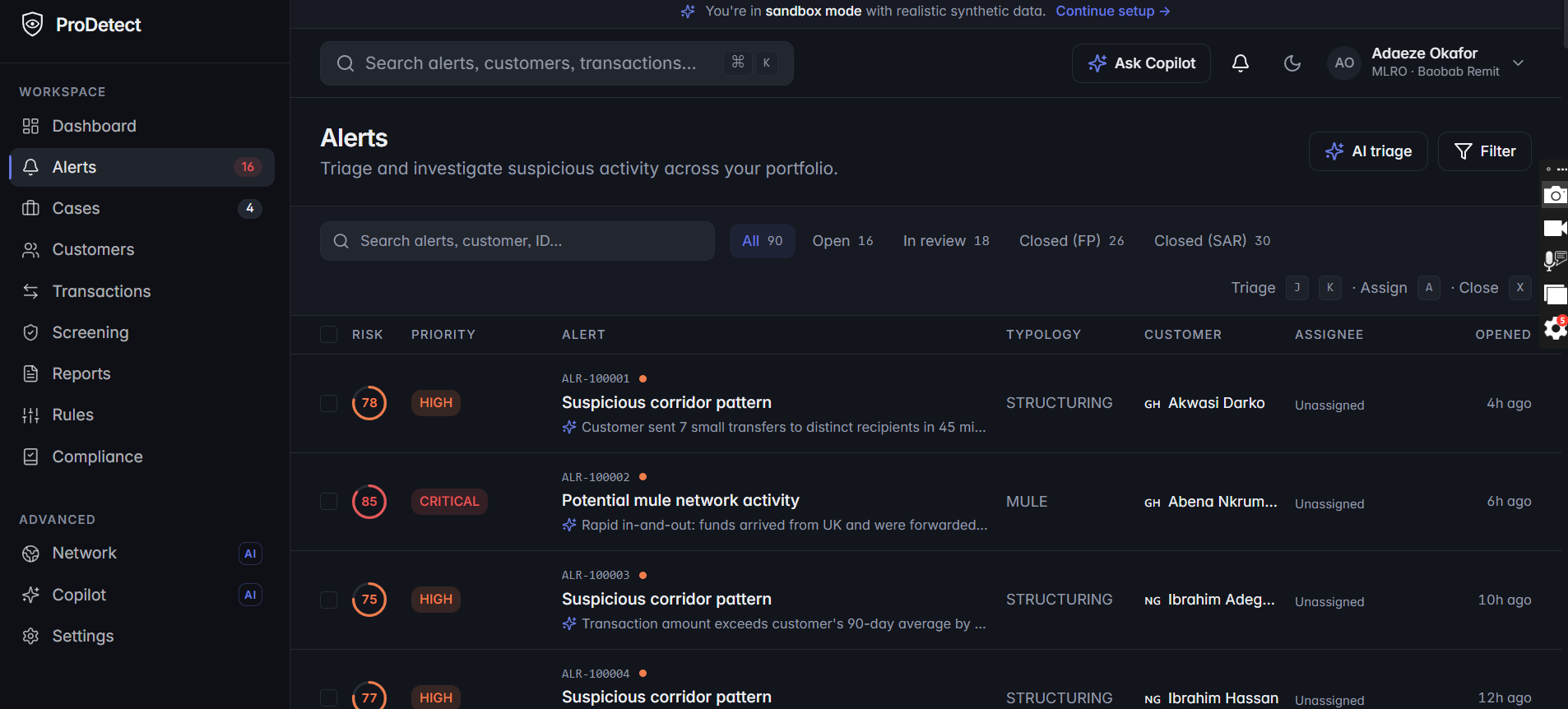
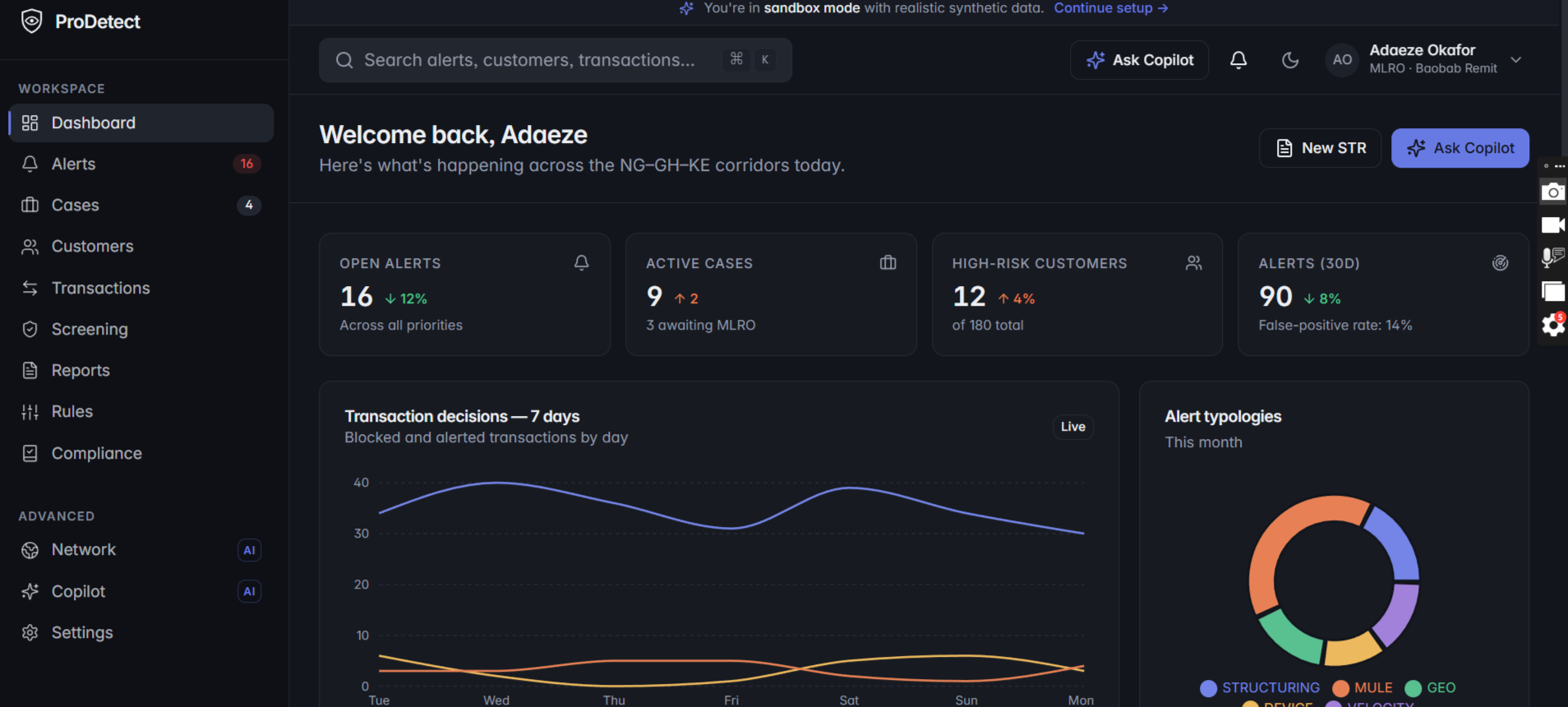
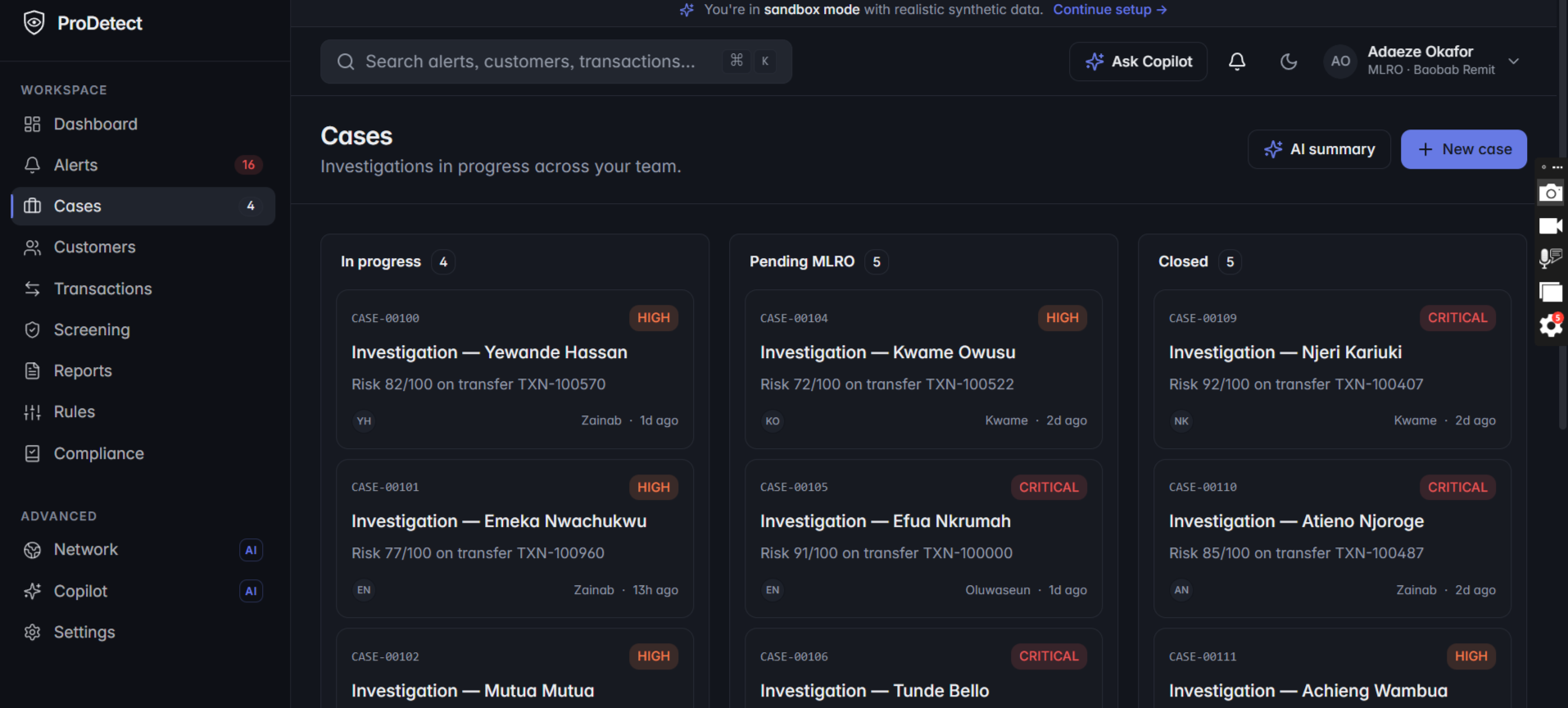
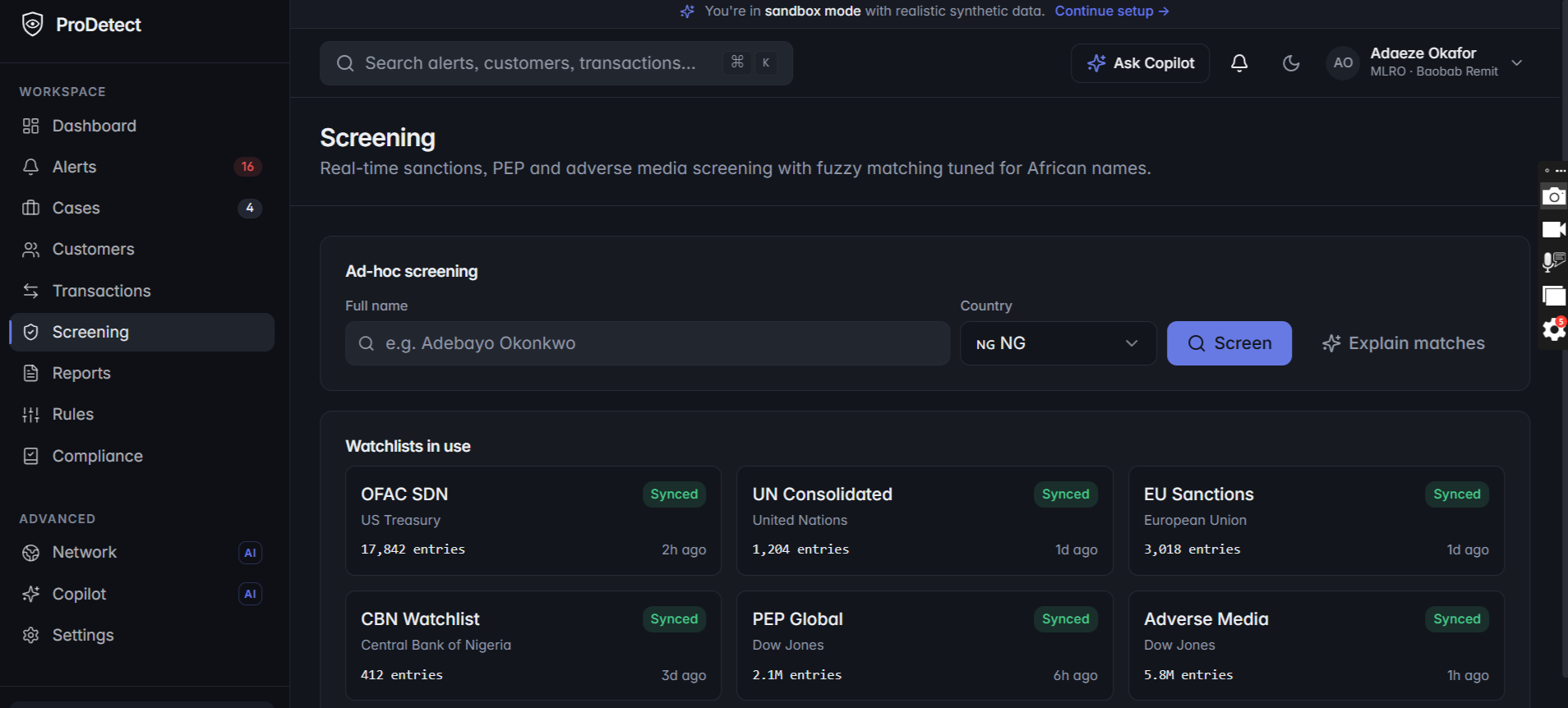
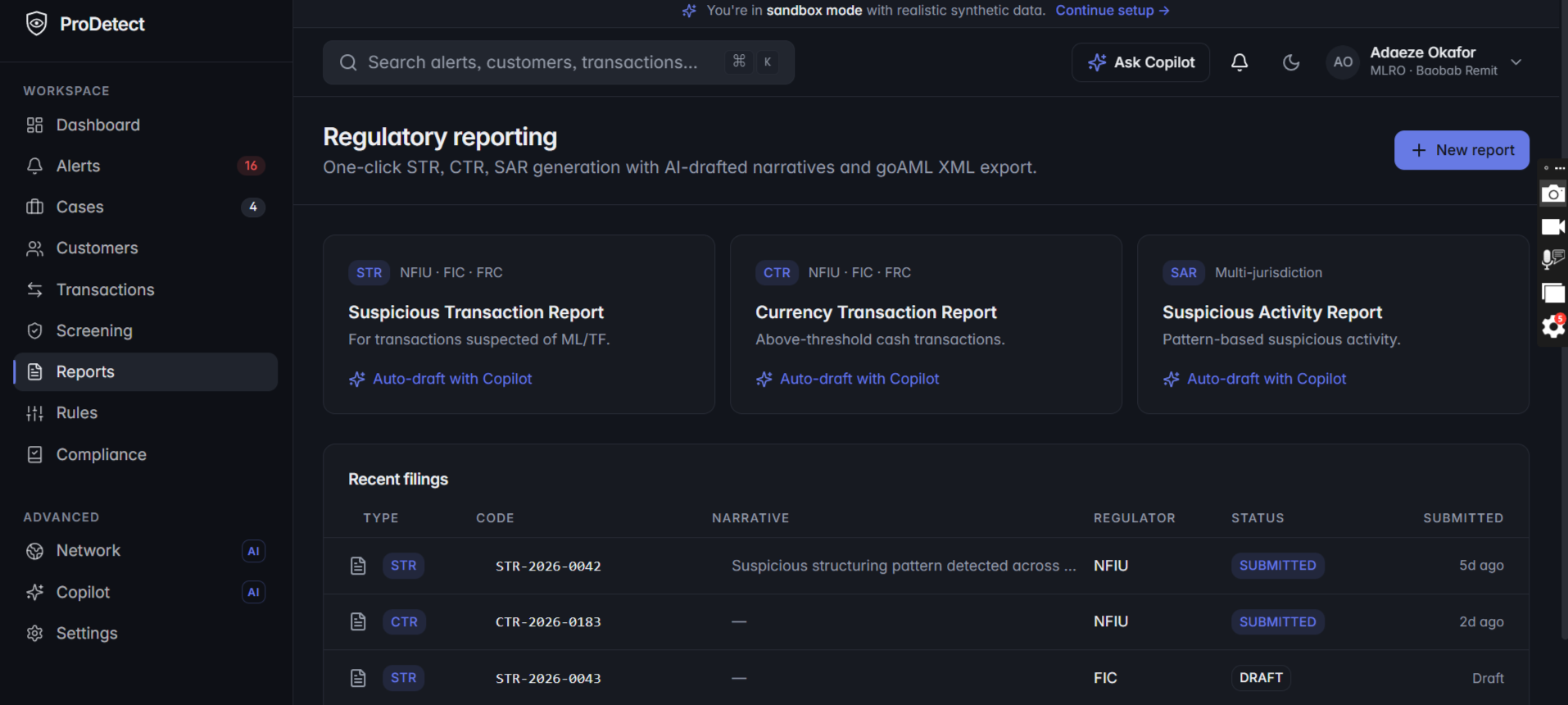
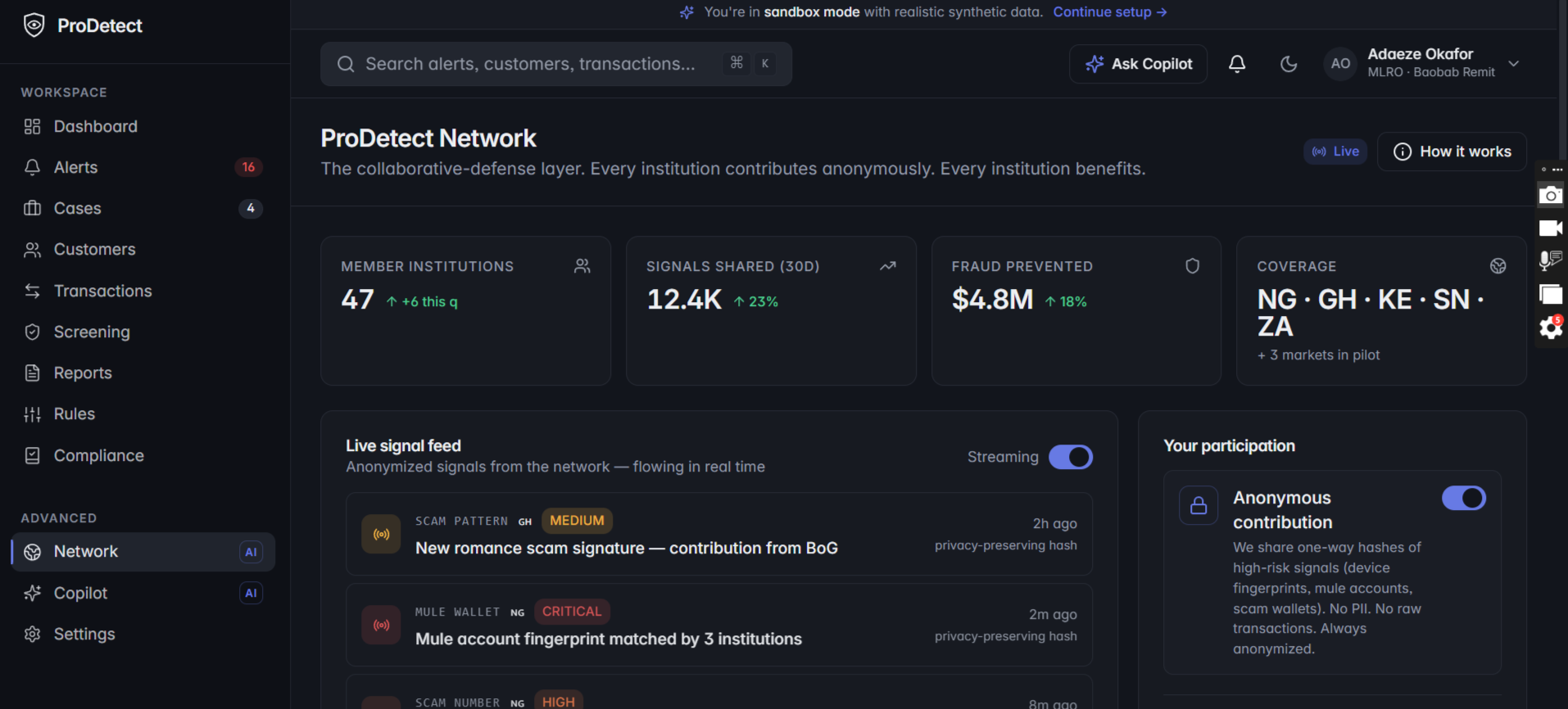
All screenshots are from the sandbox, which runs on realistic synthetic data. The numbers in them are not customer results.
Key decisions
The analyst decides
Copilot drafts, explains and suggests. It never files a report on its own. In a regulated workflow, the human sign-off is the product, not friction.
Privacy-preserving by design
The Network shares one-way hashes of high-risk signals, never personal data or raw transactions, and contribution is a setting each institution controls.
Sandbox first
Bank sales cycles are long. A five-minute sandbox with realistic data lets a compliance lead see value before a single procurement meeting.
Where it is
The sandbox is open to try. Over the next 24 months the goal is to monitor more than 1 billion transactions, building trust into every transaction and protecting financial inclusion from the ground up.
Key takeaways
- In compliance, the workflow around the alert matters as much as the detection itself.
- AI is most useful where work is slow and repetitive, like narrative drafting, and least welcome where accountability sits.
- Designing for the regulator's format from day one avoids a painful rebuild later.