
The problem
3 out of every 4 entrepreneurs struggle with public speaking anxiety.
Tech founders in Nigeria pitch constantly: at networking events, demo days and investor meetings. Many walk in anxious, because they've had too little practice, limited experience and no actionable feedback on how they actually come across.
We surveyed how founders prepare today. Most rely on what's free and on hand, none of which tells them what to fix:
Who it's for
We designed around one persona, Amina, the founder of a maternal health-tech startup.
- She's active on LinkedIn and Twitter and goes to networking events to raise investment.
- She struggles to get across the true impact of her startup when she's on stage.
- She worries she won't be able to raise from investors.
- What makes her buy: avoiding the embarrassment of stage fright.
The solution
A founder records a pitch. Podily scores it, explains what worked and what didn't, and sends them straight back to "Pitch Again", so every run builds on the last.
The 3CTES pitch analysis
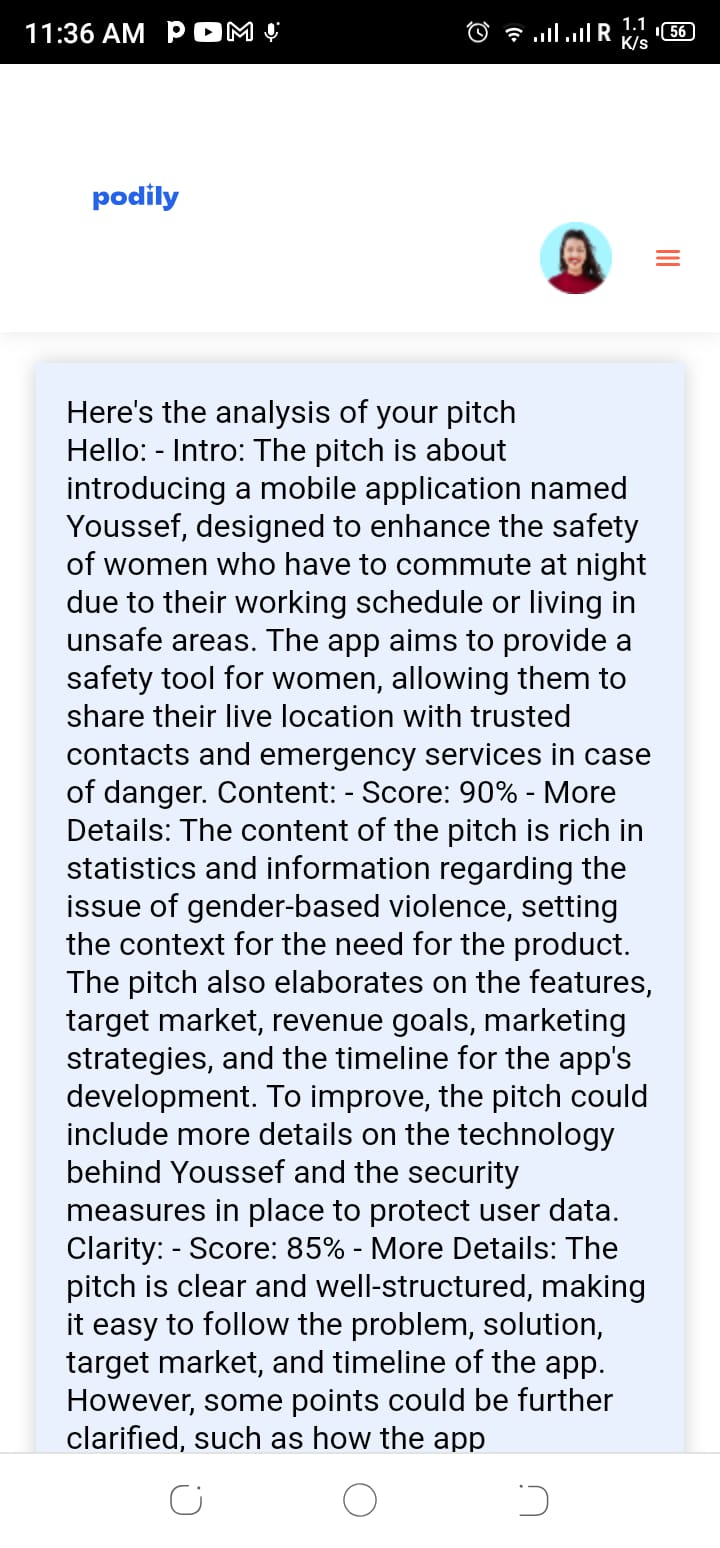
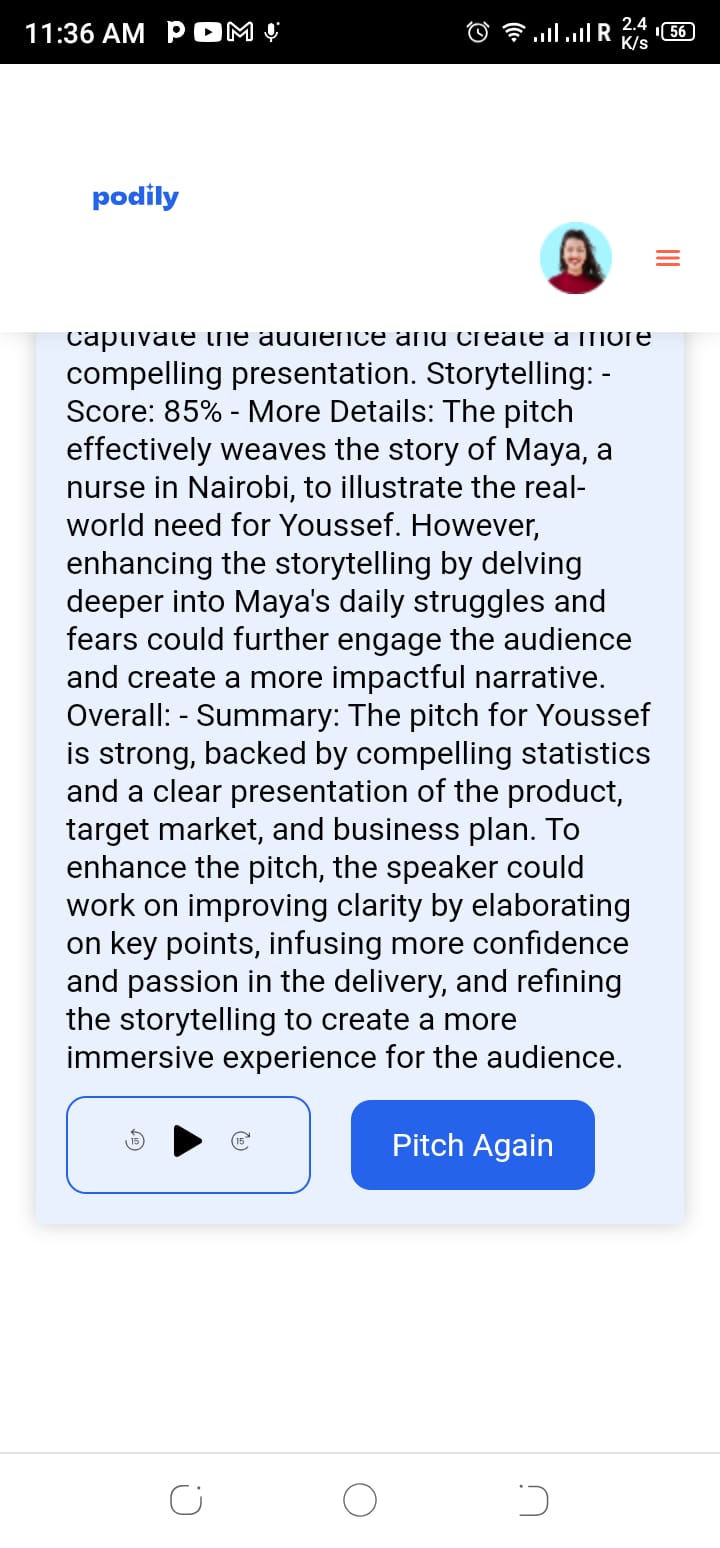
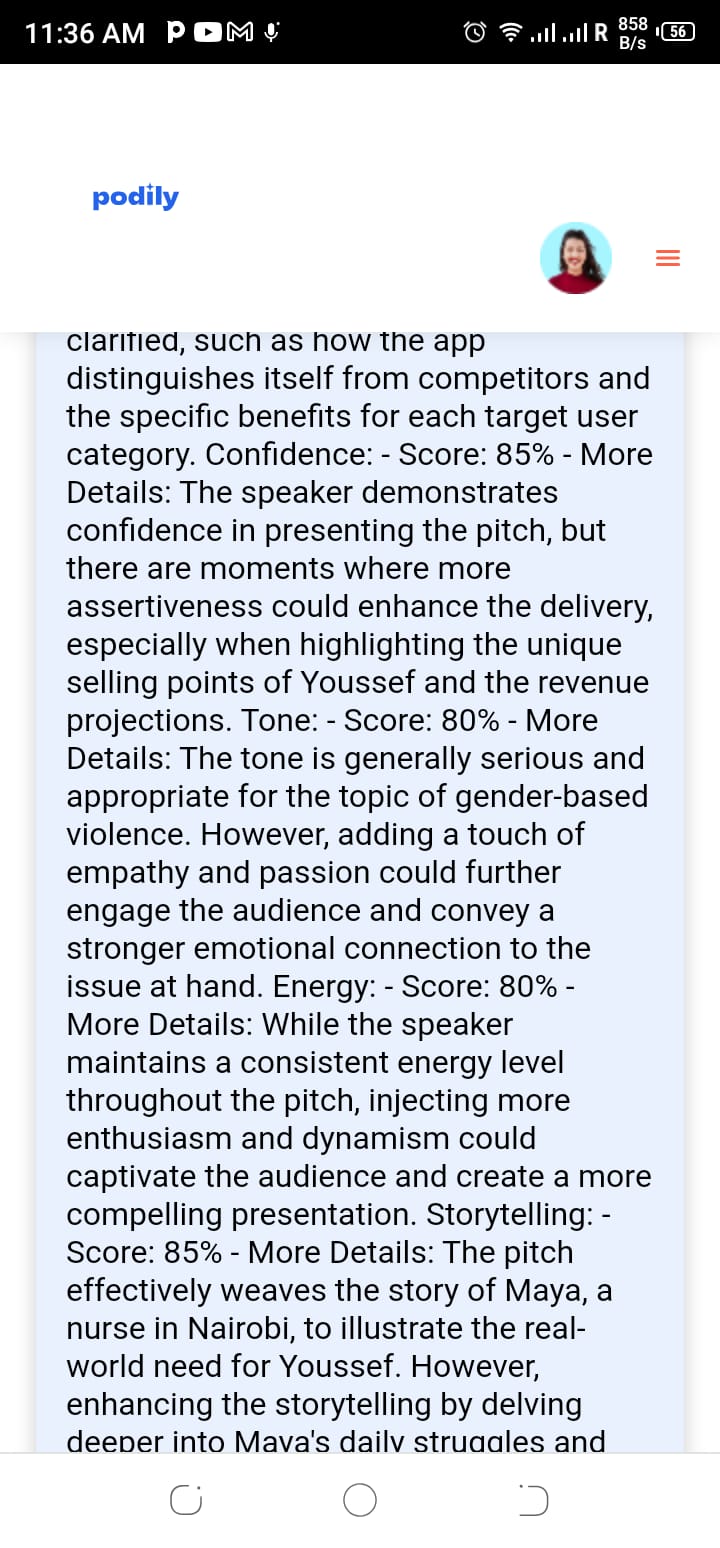
We built our own scoring framework, drawing on Peter Vogel's three dimensions of elevator pitches and Bill Jones's 7Cs of pitch evaluation. Podily scores six things, each with notes on how to improve:
How it works
- The founder records their pitch, and the audio is sent to our backend.
- Whisper converts the speech to text.
- The OpenAI API analyses the pitch against the 3CTES criteria.
- Feedback comes back as text and is saved, building a record of how the speaker improves over time.
My role
I was Product Manager and led the team, working with an operations lead, a marketing lead and a tech lead.
- Led engineers and designers to build the MVP, covering speech recording and AI-generated feedback, from concept to user testing in under 3 months.
- Ran the market research and customer survey that defined the problem, the persona and the 3CTES framework.
- Ran user testing and usability sessions with 102 users, turning findings into prioritised backlogs and iterative releases that reached a 90% positive feedback rating.
- Shaped the go-to-market: tech hub partnerships, community pitch events and content on WhatsApp, LinkedIn and Twitter.
What users told us
The first working version returned the model's raw output. It was accurate, but nobody wants to read their feedback as code.
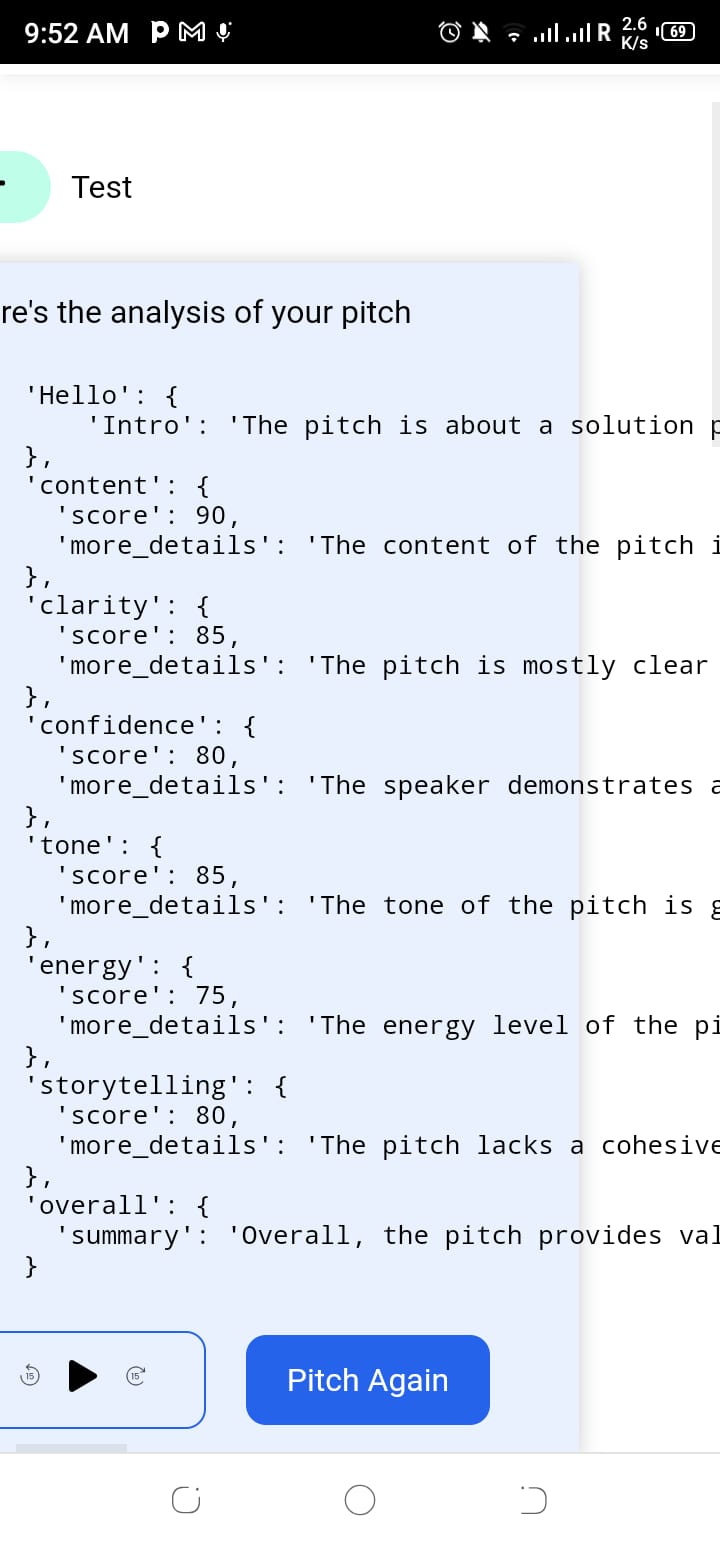
We turned it into readable sections and shared it with founders in our community. The reaction was strong, and so was the most useful note we got:
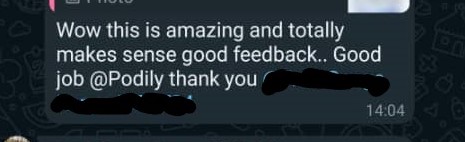
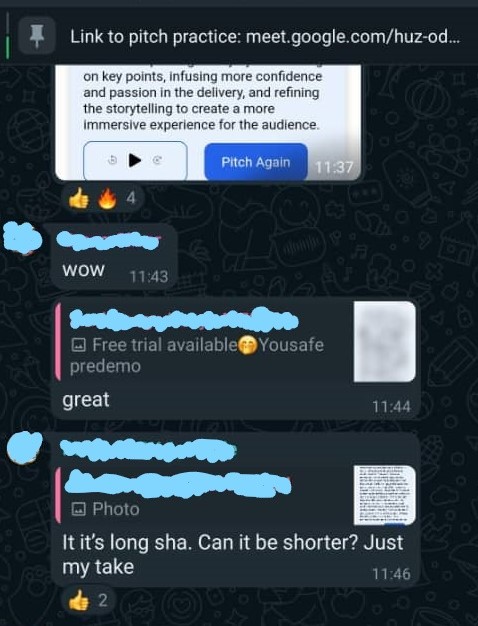
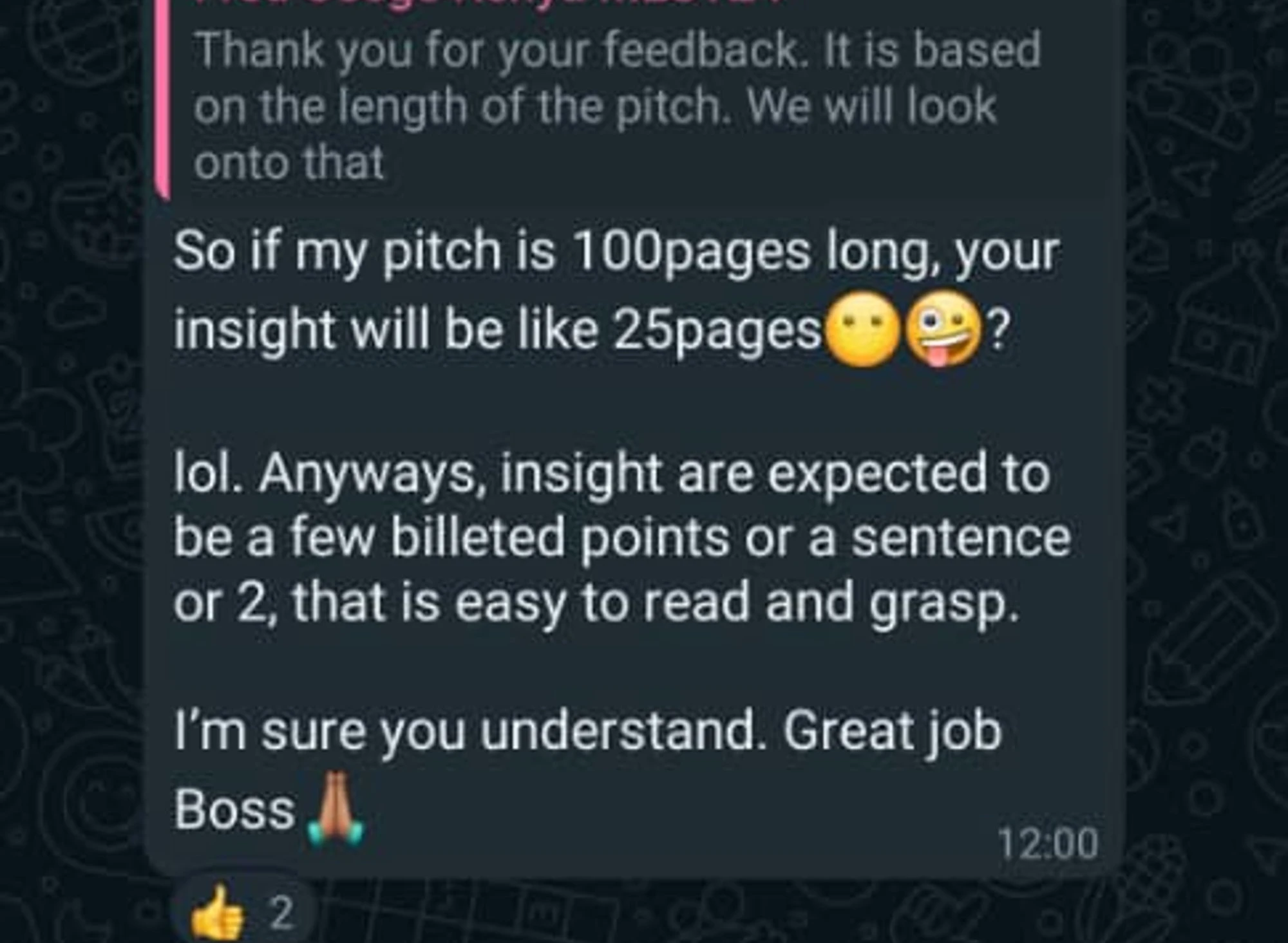
The feedback was useful, but it was too long. Founders wanted a score and the two or three things to fix before the next run, not an essay. Shorter, scannable insights went straight onto the roadmap.
Traction
Small numbers, but they answered the questions that mattered at MVP stage: founders would use it, come back to pitch again, and some would pay.
Roadmap
- May 2024Launch: elevator pitch library, audio pitch practice, text and audio analysis
- Aug 2024Industry-specific pitch library, better speech analysis, upload scripts for refinement
- Nov 2024Pitch community for peer-to-peer practice and community pitch reviews
- Feb 2025Partnerships with 20 hubs in Nigeria, plus VCs and investor platforms
- May 2025AR/VR practice and storytelling resources
Key takeaways
- Accurate isn't the same as useful. The format of AI feedback matters as much as what it says.
- Ship to a real community early. Founders told us within minutes what a month of building wouldn't have.
- A named framework (3CTES) made the product easier to explain, trust and sell.
- Validating the MVP first kept us building what founders needed, not what we assumed.